
Freespace SF: What Happens When You Give a Community Room to Create?
Category:
Civic Innovation
Read time:
6 min
Written by: Jessica Grace
In mid-May 2013, I wandered into my roommate Morgan’s bedroom and joined an early planning conversation about a space that did not yet have a name. Another roommate, Mike Zuckerman, was trying to secure an empty building in downtown San Francisco for free. It sounded improbable, but I have always been drawn to improbable ideas in the hands of dreamers and friends.
Within a few weeks, several unlikely pieces fell into place. A 14,000-square-foot former sewing machine factory in San Francisco's Mid Market neighborhood became available for one dollar for the month of June, with support from the Mayor’s Office of Economic and Workforce Development and others who saw potential in activating a long-vacant property. We gave the experiment a name—[freespace]—and opened the doors on June 1 in connection with the first National Day of Civic Hacking.
We had originally spent much of our planning time discussing a one-day event. That never happened. What emerged was far more ambitious: an attempt to stretch a 48-hour hackathon into a month-long civic experiment and let the community decide what it would become.
We provided the building. The people who entered it would do the rest.
Opening the doors before we knew the answer
There was no polished master plan waiting behind those doors. The space itself was raw, and the programming was deliberately open. People could propose an activity, teach a class, start a project, make art, bring a problem to solve, or simply arrive and see what was taking shape.
I was part of the core team and led strategy and launch work. My role was to help make an unusual idea understandable: this was not simply a venue where people could attend events someone else had designed. It was a platform they were invited to create with us. With essentially no conventional marketing budget, I used social media, storytelling, and community outreach to make that invitation visible and bring people through the doors.
They came quickly. Hundreds of people visited on opening night. Within the first three weeks, more than 2,000 people had entered the space; by the end of the original run, the number had grown to more than 6,000.
People did not arrive empty-handed. Volunteers helped clean and prepare the building. Couches, desks, dishes, art supplies, gardening tools, sound equipment, food, and other materials were donated or found. Murals began to cover the walls. A garden grew in what had been a bare gravel lot. The website went live, event requests started arriving, and the empty building began to feel less like a property and more like a shared possibility.
In a post I wrote three weeks into the experiment, I described the experience as “amazing, chaotic, beautiful.” That is still the simplest way to capture the early days. [freespace] was changing in real time because the people inside it were changing it.
A program no single team could have designed
The variety of activity was one of the clearest signs that the model was working. During the first month, the community hosted 119 free events. Across the initial run, [freespace] hosted 209 events, 95 percent of them community-led.
There were technology meetups, hackathons, yoga classes, dance, murals, movie screenings, WordPress workshops, lectures, panel discussions, open mics, concerts, clothing swaps, neighborhood tours, children’s art and gardening activities, and a giant paella party. A digital-detox event brought 711 people together without their phones and laptops. Musicians who had only just met began playing together and drew more collaborators into the room as the song unfolded.
Other ideas grew into projects with lives beyond a single event. The Yellow Bike Project offered repair instruction and created a free bike-sharing library. Plants from Hayes Valley Farm became part of a community garden. The Learning Shelter developed as a mobile classroom offering training to residents of local homeless shelters. The space also supported work for veterans and provided room for artists, students, families, entrepreneurs, and people living in nearby shelters and single-room-occupancy hotels.
That mix was essential. Central Market was a neighborhood experiencing intense change, and the aim was not to create another private enclave for one part of San Francisco. We wanted a shared commons where people who might otherwise move through the city in separate worlds could meet, make things, teach one another, and collaborate.
What happened inside the building was not orderly in the traditional sense. It was emergent. The space provided a container and a context; the community supplied the creativity. That approach attracted interest not only from artists and civic organizers, but also from businesses trying to understand how more open environments might encourage creativity, lateral thinking, and genuine engagement.
Turning one month into a movement
The original agreement covered June. But halfway through the month, we knew the experiment needed more time. The community rallied around an Indiegogo campaign and raised $25,000 to pay the building’s regular rent for July. The extension gave projects more room to grow and gave us more time to document what was happening, bring civic and business leaders into the space, and think about how the model might travel.
From early on, I believed [freespace] was an idea larger than one building. People from other cities were already contacting us because they wanted something similar in their own communities. We began imagining guides, videos, and a network that could help others activate underused space without simply copying a fixed program.
The project drew national attention. Our work was recognized by President Obama’s White House through its Champions of Change program, and members of our team were invited to the White House to present [freespace] as a new model for civic engagement and civic hacking. For a project that had begun in a bedroom meeting only weeks earlier, that recognition was extraordinary.
The model continued beyond the original Mission Street experiment. [freespace] expanded to seven U.S. cities and two international locations. Those later projects were collective achievements shaped by the organizers and communities in each place, just as the original space had been.
What [freespace] taught me
[freespace] began with a building, but the building was never the whole idea. The deeper experiment was about trust: what happens when people are given access to a shared resource, invited to contribute, and allowed to shape the outcome together?
My job was to help create the conditions in which that could happen. I shaped strategy, helped launch the space, built awareness, and translated an unfamiliar idea into an invitation people could understand. But the power of [freespace] came from what happened after people accepted that invitation.
They did not behave like an audience. They brought furniture, painted walls, taught classes, planted gardens, repaired bikes, made music, launched projects, and created relationships that no central programming team could have planned in advance.
That experience has stayed with me. Participation cannot always be engineered from the top down, and community is not something a brand can simply declare into existence. Sometimes the most meaningful thing we can build is a generous container: a place with enough structure to feel safe, enough openness to make room for surprise, and a clear invitation for people to bring their own ideas to life.
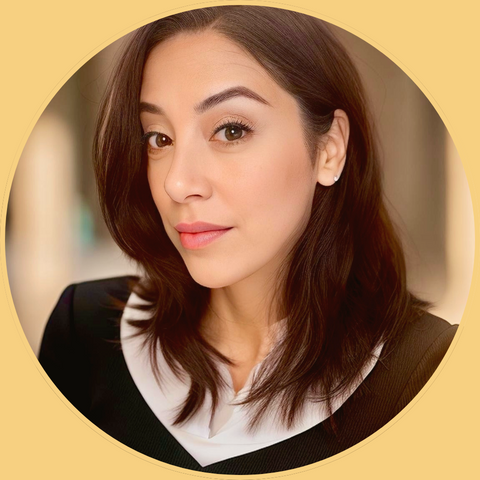
Jessica Grace is a seasoned marketing strategist and fractional CMO specializing in early-stage startups and visionary entrepreneurs. With a sharp eye for brand storytelling and data-driven growth, she transforms ideas into impactful, values-driven brands.
Follow me: