
Building the Conditions for Participation, Belonging and Community
Category:
Civic Innovation
Read time:
4 min
Written by: Jessica Grace
When I look across my civic-innovation work, I see projects that appear, on the surface, to belong to completely different worlds.
I helped turn an industrial property into a working artists’ collective. I brought emerging psychedelic science into public cultural spaces. I worked with a team to make a city budget understandable. I helped open a San Francisco building to community-created programming, developed shared resources in a disaster-recovery center in the Philippines, and invited New York City businesses to help decide what mayoral candidates should be asked in a public debate.
Again and again, I found myself working on the space between a system and the people who needed a way into it. The question was always some version of this:
What do people need in order to understand, influence, and act within the systems shaping their lives?
Sometimes the answer was a physical place.
At the City of Seven Gates Artists’ Collective Space, a group of friends and I redeveloped a former brine shrimp factory complex into studios, an art gallery, meeting rooms, an industrial kitchen, food-production facilities, storage, and a public event venue. I managed operations, artist studios, and events and served as our liaison with the city. We wanted local artists and food creators to have affordable infrastructure, greater visibility, and a stronger connection to the civic and economic life around them.
At [freespace] SF, physical space became an even more explicit civic experiment. We opened approximately 14,000 square feet to free, community-generated programming and asked people not just to attend, but to help create what happened there. I led strategy and launch work, using social media and community outreach to make that unusual invitation clear. Thousands of people responded by bringing their own ideas, skills, and projects through the doors.
Sometimes the answer was information people could actually use.
At the Multidisciplinary Association for Psychedelic Studies, I worked with knowledge that was scientifically complex, politically sensitive, and culturally stigmatized. As North American Events Coordinator, I produced public programs across the United States and Canada and developed a festival strategy that brought education into cultural environments where broader audiences were already gathering. My job was to help serious, emerging research travel beyond specialist communities and become part of a more open public conversation.
At Open Budget Oakland, the information was public but buried in nearly 20,000 rows of spreadsheet data. I worked with developers, GIS professionals, nonprofit participants, city officials, and civic partners to help launch an interactive way for residents to explore how Oakland collected and spent shared resources. My focus was narrative communications and awareness: helping people understand not only the data, but why the tool existed and how they could use it to enter the conversation.
Sometimes participation depended on practical resources.
In Tacloban, after Super Typhoon Haiyan, I spent approximately four months helping Philippines Communitere develop a permanent community hub. I worked on classes, a maker space, and a tool-lending library where residents who had lost homes, livelihoods, and equipment could borrow tools, build basic furniture, and learn skills. Recovery was not only about delivering replacement goods. It was also about restoring people’s ability to build, repair, and decide for themselves.
And sometimes the barrier was control over the agenda.
With the Open Debate Coalition, I worked on outreach for New York City’s 2017 mayoral debate. The coalition’s platform let people submit and rank the questions they wanted candidates to answer. My team reached out to thousands of local businesses, helping extend the opportunity beyond political insiders and habitual activists. The technology created the mechanism; our outreach helped turn it into a real invitation.
Across all of these projects, my role was rarely to arrive with a fixed answer. More often, I helped build the bridge between an emerging idea or complicated system and the people whose participation would give it meaning. I used strategy, communications, events, partnerships, outreach, operations, and program design to make something unfamiliar more understandable and a point of entry more visible.
That's why I don't think of this work as simply promotion. The goal was not only to attract an audience. It was to help an audience become participants in creating the community they lived and worked in.
At City of Seven Gates, that meant connecting creators with space, customers, and civic opportunities. At MAPS, it meant giving people an accessible way into a difficult scientific conversation. At Open Budget Oakland, it meant turning public data into public understanding. At [freespace], it meant inviting a community to create the program itself. At Communitere, it meant restoring access to tools and skills. At the Open Debate Coalition, it meant widening the circle of people who could influence the questions asked in public.
These experiences shaped the way I understand innovation. It is not always a new technology, and it is rarely just a clever idea. Often, innovation is the patient work of changing the conditions around an idea: lowering a barrier, translating complexity, sharing a resource, building trust, or making it clear that someone is genuinely invited to take part.
This work also connects naturally with the rest of my career in brand strategy, emerging technology, and organizational systems. In both civic and commercial settings, I have often worked where something new needs to become legible, where different groups need to understand one another, where an idea needs structure, and where people need a path from passive awareness to active use.
The difference in civic work is that participation is more than a means to an outcome. Participation, belonging, and community is the outcome.
These projects gave me very different ways to practice the same essential work: build the bridge, open the door, and create the conditions in which more people can shape what happens next.
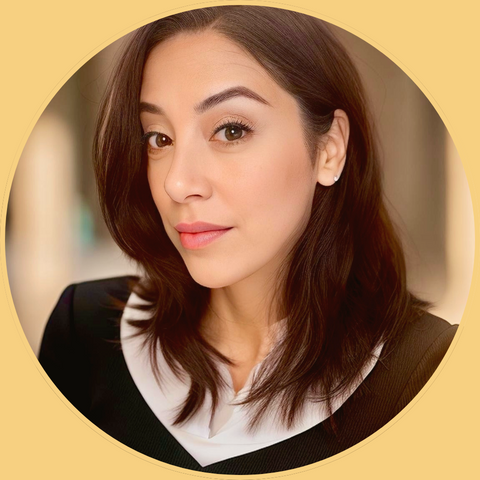
Jessica Grace is a seasoned marketing strategist and fractional CMO specializing in early-stage startups and visionary entrepreneurs. With a sharp eye for brand storytelling and data-driven growth, she transforms ideas into impactful, values-driven brands.
Follow me: